Every operator has typed 'wholesale beef price' or 'grossiste mozzarella' into a search bar. Here's the uncomfortable truth about whatever number you find: it's the price of the kilo you buy — never the cost of the kilo you serve. Between the two sit trim loss, cooking yield, waste, and portioning drift, and they change the ranking of suppliers more often than the catalogue prices do. This is the AP/EP arithmetic — as-purchased versus edible-portion — applied product by product to the things restaurants actually buy.
The one formula that reorders every price list
That example isn't rhetorical — it's the standard trap of 'cheaper' meat: more trim, more gristle, more shrink, and the bargain kilo ends up dearer than the premium one. The same inversion happens across the walk-in. What follows is the same arithmetic, product family by product family.
Meat and fish: trim and yield decide
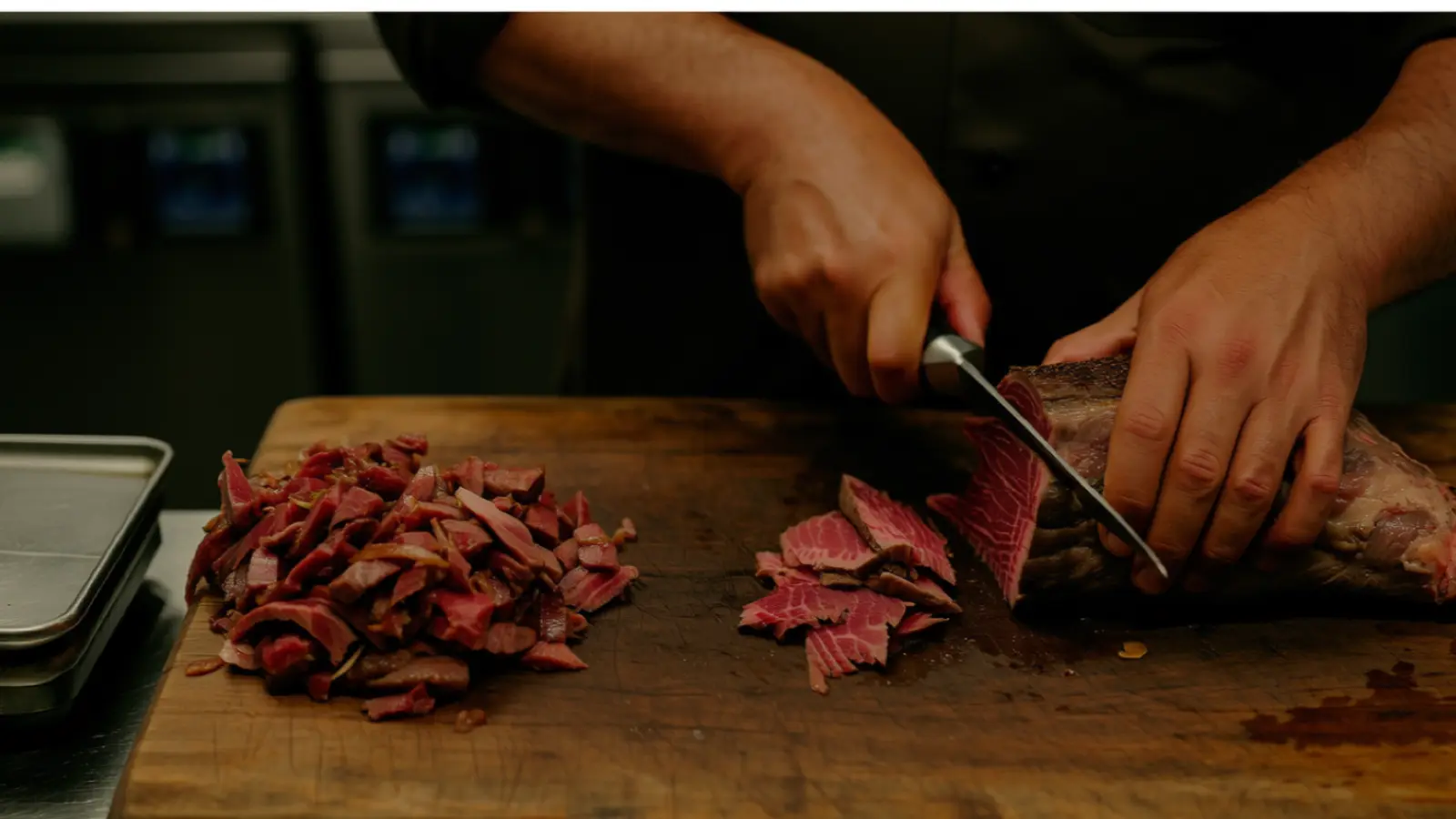
- Beef (entrecôte, minced) — compare suppliers on usable yield after trim, not catalogue price; a 10-point yield gap swallows a 2-per-kilo price advantage. For minced beef, water loss in the pan is the hidden second yield
- Fresh fish — the brutal one: whole-fish yields after gutting, skinning and filleting commonly run 40–55%, so the displayed kilo price roughly doubles on the plate; yield loss is its own discipline
- Smoked salmon — pre-sliced costs more per kilo but serves at ~100% yield; whole sides cost less and lose ends and trim. Which wins depends on your volume and what you do with the trimmings
Produce, cheese, and the pizza equation
- Fruits & vegetables — the most volatile line on any invoice, and the one where waste hides: peel loss, storage death, seasonal price swings. Buy to sales forecasts, not to habit, and track the invoiced price weekly
- Mozzarella — the pizza margin lives in grams, not in the wholesale price: a 20g drift per pizza across a service costs more than a supplier switch saves. Weigh the portion, then negotiate the kilo
- Cheese generally — pre-grated conveniences cost more per kilo and serve at full yield with less labor; blocks cost less and lose rind and drying. Run the numbers both ways before calling either 'expensive'
Fry oil, coffee, and the keg: cost per output, not per litre
- Frying oil — the real metric is cost per service across the oil's usable life: an oil 20% dearer that lasts 40% longer fry cycles is cheaper. Filtering discipline moves this number more than supplier choice
- Coffee — price the espresso dose, not the kilo: at 8g a dose, a kilo pours ~125 shots, so a 2-per-kilo price difference is under 2 cents per cup — while a sloppy 10g dosing habit costs more than the premium bean
- Beer kegs — a 30L keg theoretically pours ~60 half-litres; real bars serve fewer after foam, line cleaning and spillage. We've done the full keg arithmetic — the missing pours are where the keg price stops mattering
What this means for choosing suppliers
Comparing two suppliers on catalogue price is comparing fictions. The honest comparison is landed, usable cost: price after negotiation, after delivery, after your actual yields — which requires knowing your yields, which requires specs that carry them. And once you buy, the work isn't over: supplier prices drift between negotiations, invoice by invoice, and silent increases undo a good sourcing decision within a quarter. The full method for running the supplier line — receiving, price history, negotiating with receipts — is in the supplier management guide.
At Chat Noir, every invoice is scanned and every product's price history sits next to its recipe cost — so when a rep says 'best price in Geneva', the answer comes from the file, not from memory. That's the entire trick: the operator who knows their usable cost per product negotiates a different conversation than the one who knows the catalogue.