To cost a recipe, add up the cost of every ingredient at its edible-portion price, then divide by the number of portions the recipe yields. A batch that uses $12.40 of ingredients and yields 8 plates costs $1.55 per plate. That per-portion cost is the number your food cost percentage, your menu price, and your margin are all built on.
The addition is trivial. What makes recipe costing go wrong is three things underneath it: ingredients priced as-purchased instead of edible-portion, sub-recipes and prep that never get costed, and purchase prices that drift the moment you look away. Get those right and the number holds; get them wrong and every downstream figure is quietly off.
Cost a dish and see its food cost %
Ingredient cost, ex-tax price, and your target ratio — free tool, no sign-up.
The recipe costing formula
Recipe cost = sum of (each ingredient's edible-portion cost). Cost per portion = recipe cost ÷ yield (number of portions). That's it — but each ingredient line has to be the real cost of the quantity you actually use, not the price on the invoice.
Worked example — a bolognese batch: 2kg beef mince at $9/kg = $18.00, 400g soffritto (from $3.20 of vegetables, 90% usable = $3.56), 800g tomato at $2.10/kg = $1.68, 200ml red wine at $8/750ml = $2.13, herbs and seasoning $0.90. Total: $26.27. The batch yields 12 portions. Cost per portion: $26.27 ÷ 12 = $2.19. Sell the pasta at $16 ex-tax and the food cost is 13.7% — before you forget the parmesan and the bread.
Cost the edible portion, not the invoice
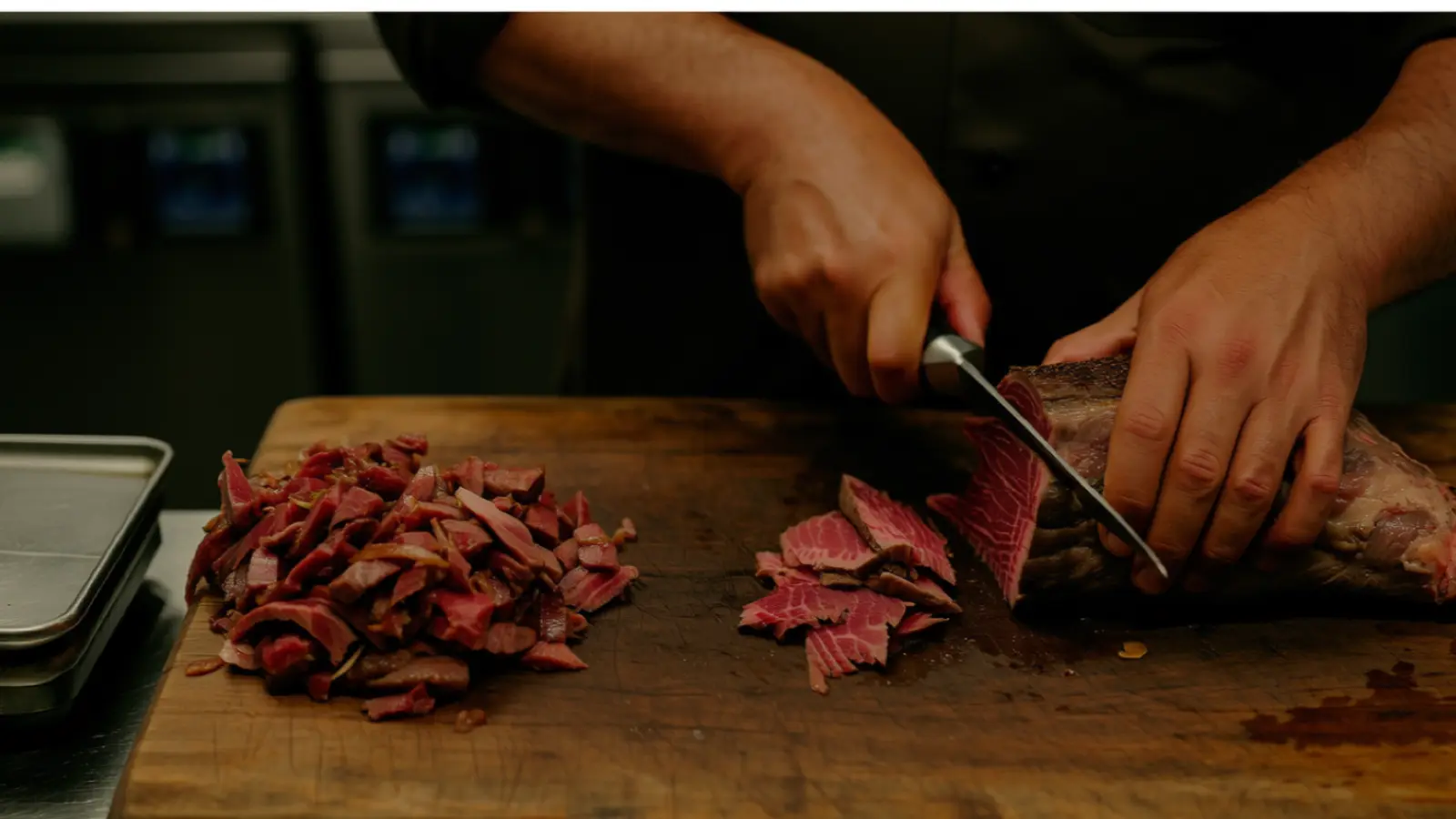
The single biggest error in recipe costing is using the as-purchased (AP) price. You bought beef fillet at $24/kg, but you trim it to 80% usable — the edible-portion (EP) cost is $30 per plated kilo. A bunch of herbs gives usable leaves off maybe 60% of the stems. A pineapple loses 40–50% to skin and core. Cost the quantity that reaches the plate, or every dish with fresh product is understated.
This is AP vs EP, and it's why a recipe that looks like it costs $4 on paper can cost $5.50 in the kitchen. The gap doesn't show up until it's aggregated on a P&L, weeks later.
Don't forget sub-recipes and prep
House-made prep isn't free. Your stock, your soffritto, your simple syrup, your demi-glace — each is its own mini-recipe with its own cost per litre or per kilo, and each feeds into the dishes that use it. Cost the prep once, then carry its unit cost into every recipe that draws on it. When the price of an ingredient inside a sub-recipe moves, every dish above it should update — the part almost no spreadsheet keeps up with.
Cost per portion — where yield matters
You cost the batch, but you sell the portion. Divide the batch cost by the number of portions it actually yields — and be honest about yield: a sauce reduces, a roast loses weight, a cake gets trimmed. Overstate the yield and you understate the cost per plate. This is the same discipline as menu-level food cost percentage: the recipe cost is the input, the food cost % is what you do with it.
The real problem: the number goes stale
A recipe cost is a photograph of one day's prices. Suppliers raise prices, seasons shift, a case size changes — and the cost you calculated in January is fiction by March. Industry studies find kitchens run 3–5% between theoretical and actual food cost (Restaurant365, MarginEdge), and stale recipe costs are a big part of that gap. Costing a recipe once is easy. Keeping every recipe current, every time a price moves, is the job — and it's the job that gets abandoned by the second busy week.
How methodus costs recipes automatically
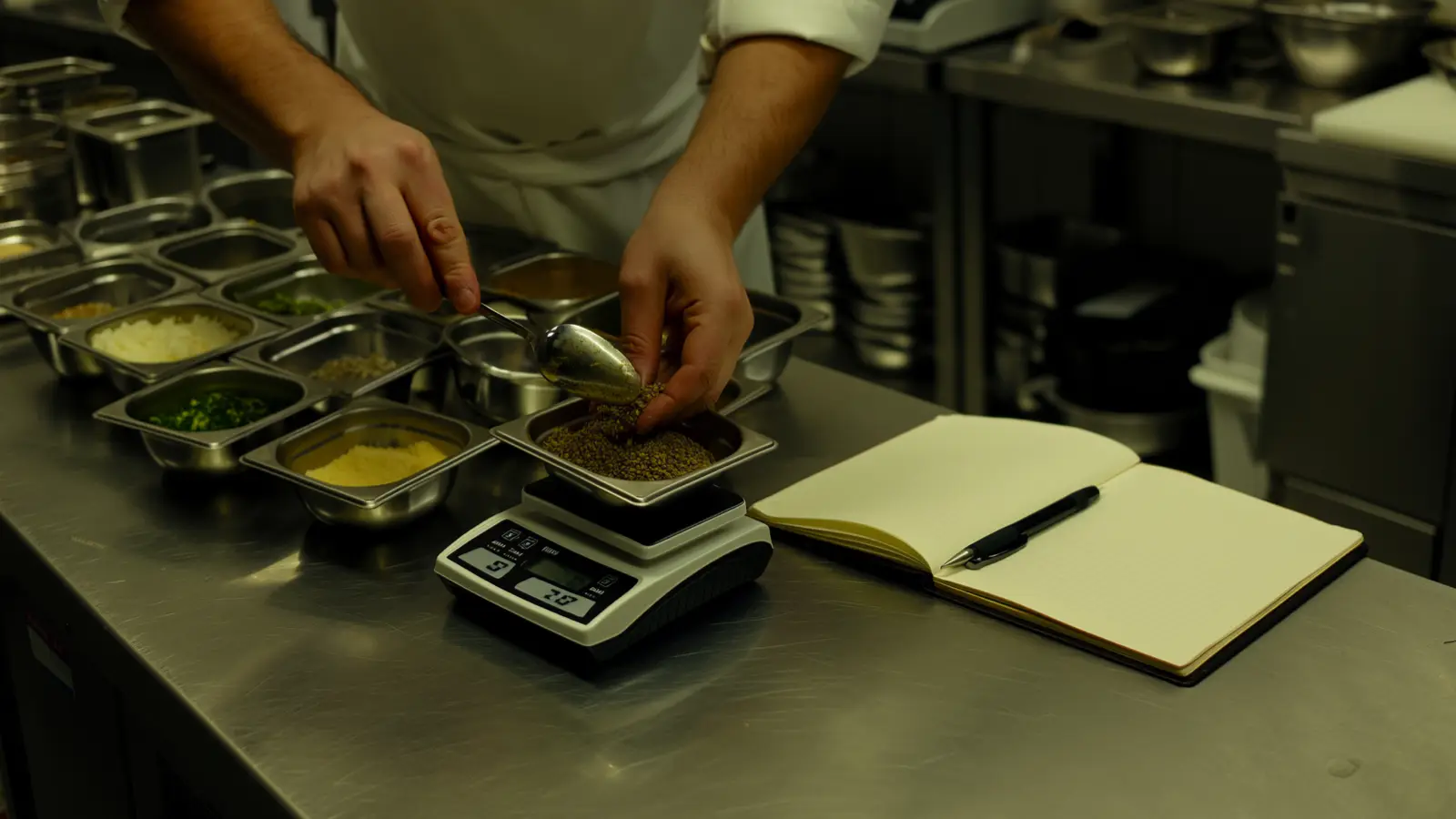
methodus builds the recipe spec sheet — grammages, method, allergens, and a live cost — and keeps the cost current for you. Drop a supplier invoice and it reads every line and updates your purchase prices; every recipe and sub-recipe that uses those ingredients recalculates automatically. A chef or bartender can dictate a recipe in 35 seconds and the fiche comes out complete and costed on your real prices.
So the cost per portion is the real number today, not a January photograph — and the number your food cost, menu price, and margin all inherit is finally the true one. You stop rebuilding the same spreadsheet every month: what used to drift becomes a figure you can actually run the business on.