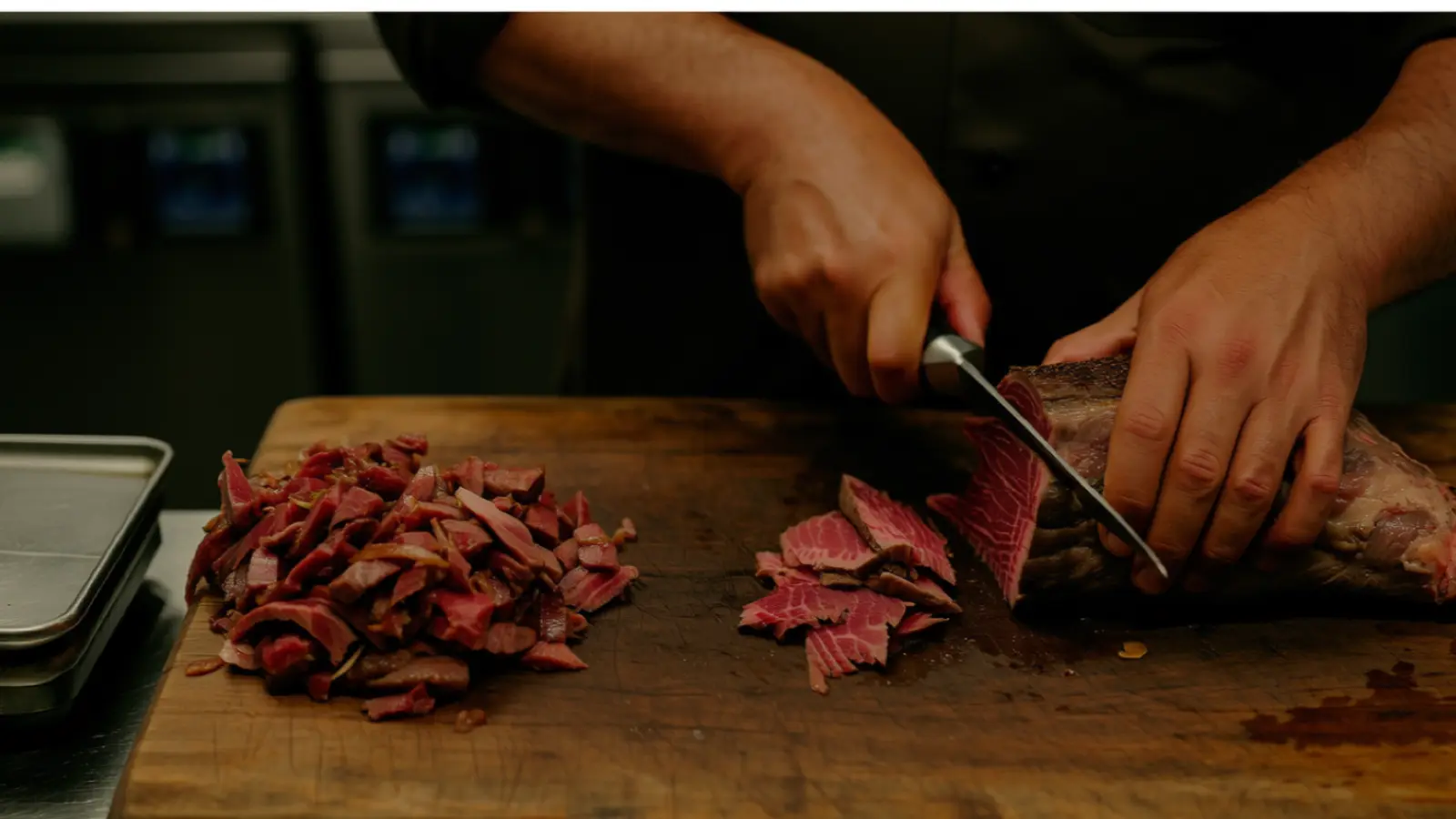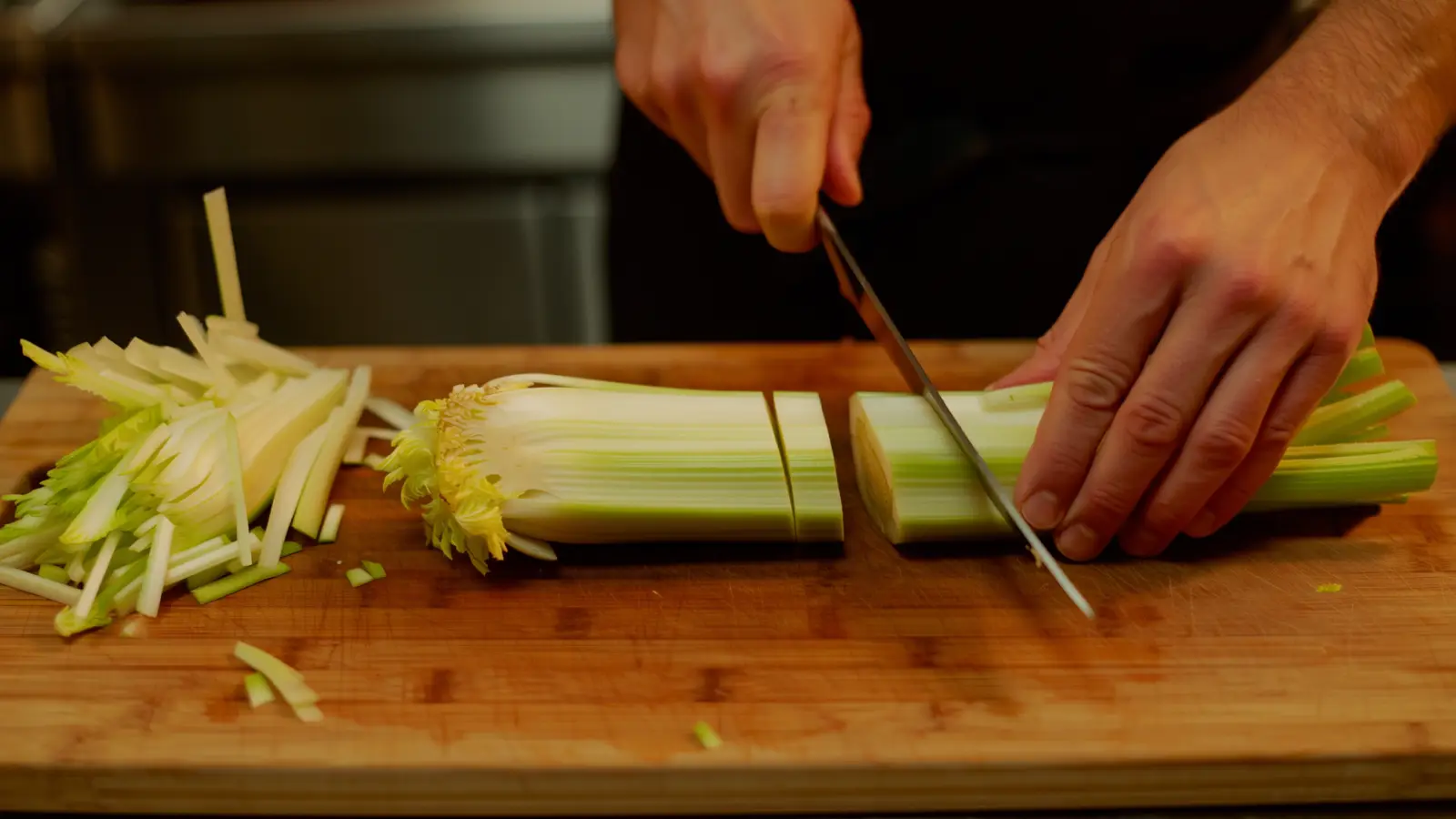
A kilo of celery costs what the invoice says — but the kilo that actually reaches a plate is smaller, because trimming, peeling, and cooking loss all happen after the scale at receiving and before the fork. The real cost of what's served is higher than the invoice price suggests, and the gap has a name: AP vs EP.
As-purchased vs edible-portion
AP is what you bought and paid for — the kilo on the invoice, trim and all. EP is what's actually usable after peeling, trimming, boning, or cooking loss removes the part that never reaches the plate. The invoice price is an AP number; the real cost per portion has to be calculated on the EP weight, or every dish built on that ingredient is costed against a number that was never true. The full definition, with the conversion math, is in AP vs EP.
Why the invoice price quietly lies
A vegetable invoiced at a low per-kilo price can still be an expensive ingredient once the trim comes off — celery, herbs, and anything peeled routinely lose a meaningful share of their purchased weight before they're usable, and that lost weight was still paid for. A recipe costed on the AP price alone looks cheaper on paper than it actually is on the P&L, every single time it's served.
How much is normal to lose
Loss varies a lot by product and by cut — a fillet loses far more to trim than a whole roast; a leafy herb loses more to stemming than a root vegetable loses to peeling. There's no single number that applies across a menu, which is exactly why yield needs to be measured per ingredient rather than assumed from a rule of thumb that happened to be right for something else.
A concrete example
A kilo of whole celery costing a few francs looks cheap on the invoice. Trim away the base, leaves, and stringy outer ribs and the usable weight might be closer to 80% of what was bought — so the real cost per usable kilo is meaningfully higher than the sticker price, before a single dish is even costed. Skip that step and every recipe using celery is quietly undercosted.
Turning it into a usable number
Yield percentage — EP weight divided by AP weight — is what lets a recipe cost be built on the number that's actually true, not the one on the invoice. Once it's measured for an ingredient once, it holds until the supplier, cut, or prep method changes meaningfully. The calculation method is in yield calculation.
This is the other half of why pro kitchens weigh everything and scaling a recipe correctly — a recipe that's precisely weighed and correctly scaled is still wrong if it's costed on AP weight instead of EP. The full reference is in the kitchen conversions guide.