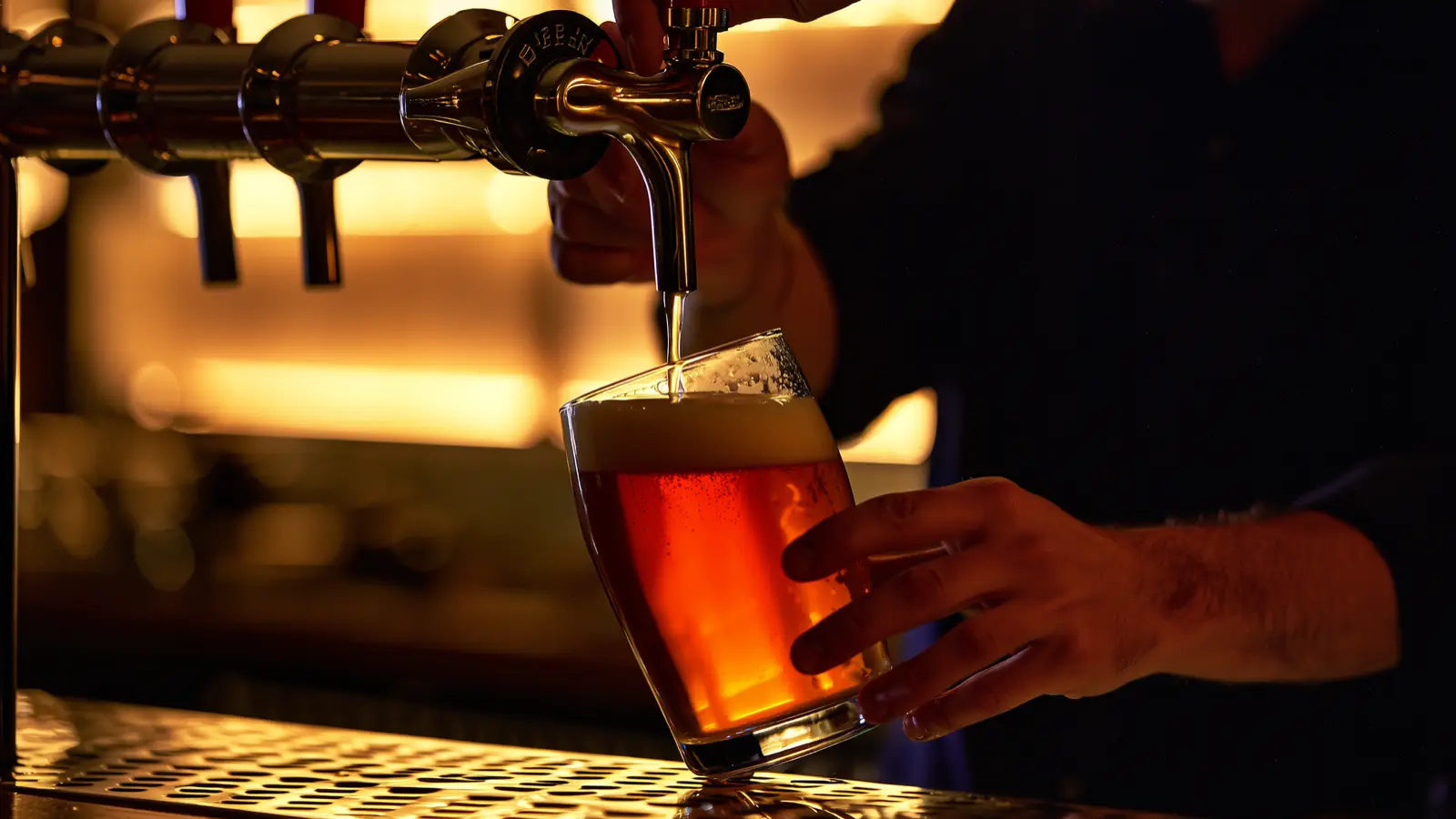
Draft beer targets roughly a 20% pour cost — beside bottled beer's 20–30%, it's the better margin engine on paper (Restaurants Canada). The paper number rarely survives contact with the line. Kegs leak margin in ways bottles can't: foam poured down the drain, line cleaning flushes, over-filled glasses, and pints that never meet a ticket. A bottle is a unit you count; a keg is a promise you have to audit.
The audit is arithmetic. A 30-litre keg holds sixty 50cl pours in theory. Between foam at tapping, the cloudy first pulls after a line clean, and the head settling generous, a well-run bar realizes something like 55. Every pour below that number doesn't dent the margin — it is the margin: those five missing pints are beer you already paid for, 37.50 of revenue per keg that never reaches the till.
Keg yield: the only number that matters
Notice what's in the denominator: pints sold, not pints the keg theoretically holds. Say the keg costs 90 and the pint sells at 7.50: sixty theoretical pours put the spec at exactly 20%. Sell only 50 of them and the real number is 24%. The four points between spec and reality are your line losses — and they never appear on an invoice.
Where kegs actually leak
- Foam and first-pull waste — worst on warm lines, long runs, and freshly cleaned lines
- Glassware drift — a 50cl spec poured into 56cl glasses is a 12% giveaway that looks like generosity
- The unticketed pint — staff drinks and regulars' top-ups that never hit the till
- Temperature and gas pressure set wrong — the line pours foam until someone notices
The detection tool is keg-versus-till: pints sold per keg, tracked every time a keg kicks. At Chat Noir, my club in Geneva, the register matches 98% of sales lines to a costed recipe automatically — 300,000+ units over 18 months — and that matching is what makes a category drift visible in days: when a keg starts yielding 48 tickets instead of 55, something on the line changed, and you know before the next order goes out.
Holding the 20%
- Log pints-per-keg at every kick — the trend matters more than any single keg
- Match glassware to spec; retire the odd glasses that crept in
- Put line cleaning on the calendar and accept its cost as planned, not mystery, loss
- Price the pint from realized yield, not the brewery's theoretical pour count
Draft is still the best beer margin you can sell — the beverage cost bands hold once the line is watched. The bars that lose on draft aren't unlucky; they're pricing sixty pours and pouring fifty.