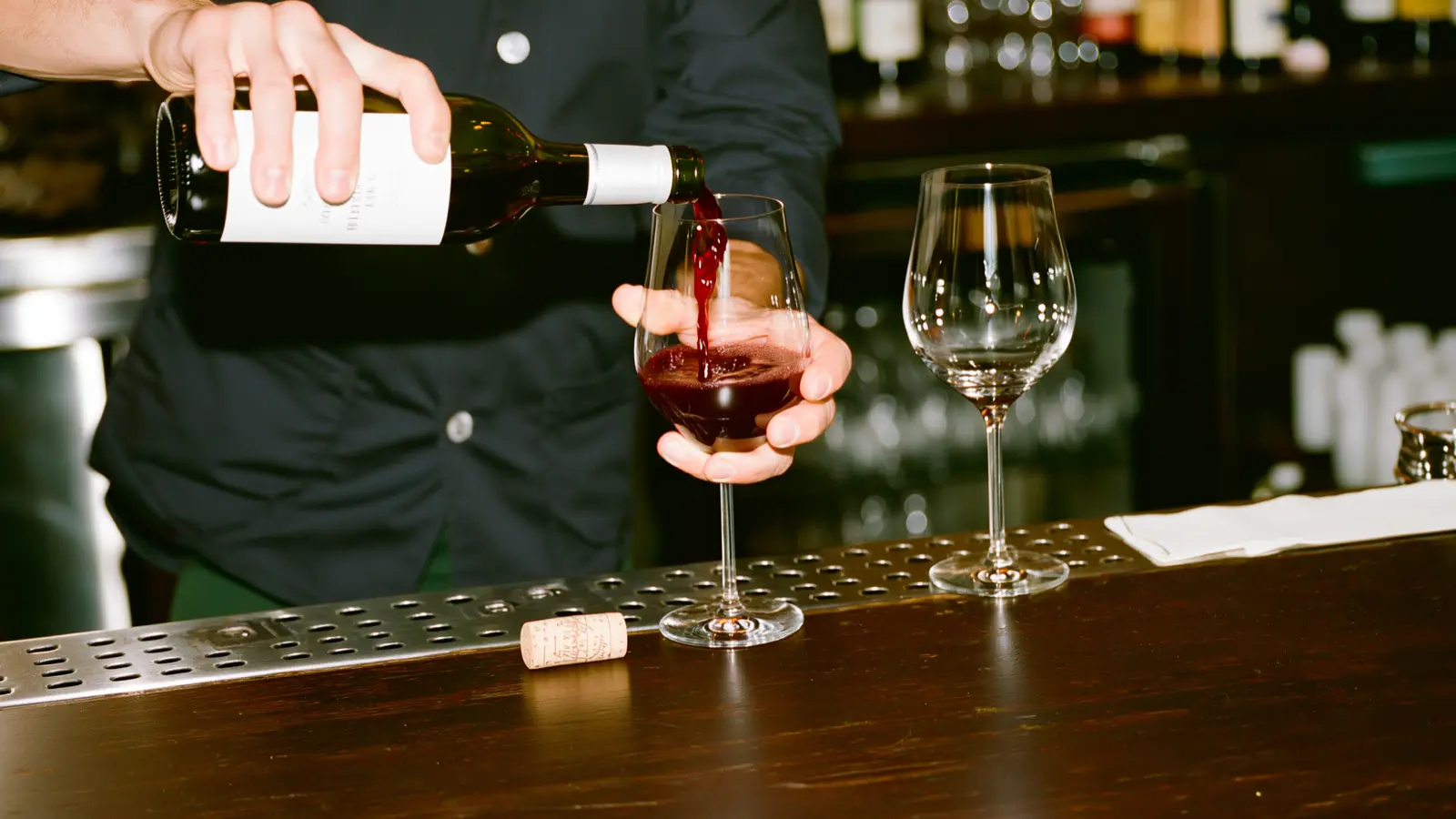
Wine carries the highest pour cost in the building: 30–40% of the glass price, against 15–20% for liquor and about 20% for draft (Restaurants Canada, via Sculpture Hospitality). That's structural — wine has no mixer to stretch it — and it means by-the-glass pricing has the least room for error of anything on your list. Get the yield or the price wrong and the pour serves margin to the guest along with the wine.
The arithmetic starts with yield. A 75cl bottle holds five 15cl glasses — in theory. In practice you lose to the taste-pour, the heavy hand, and the last centimetre that doesn't fill a glass; call it four and a half. The classic trade heuristic — the first glass pays for the bottle — exists because it builds that loss in: price one glass at your bottle cost and the remaining pours carry the beverage margin.
The by-the-glass math, honestly
A bottle that costs 12 and yields 4.5 glasses puts 2.67 of wine in every glass. Sold at 9, that's a 30% pour cost — top of the healthy band before a drop of oxidation loss. Sold at 8 it's 33%. The same wine by the bottle at 48 runs 25%. By-the-glass is structurally more expensive to sell; the price has to say so.
The second leak: the open bottle
Every open bottle is on a clock. Without preservation, most still wines have two or three service days before they're not pourable; with gas systems or vacuum stoppers you buy several more. The costing consequence: a slow-moving glass pour that sends a third of each bottle down the sink doesn't have a 30% pour cost — it has a 45% one, whatever the spec says. Track opened-versus-sold on your glass list weekly; it's the wine version of the overpour variance.
The glass that sold at cost
During an onboarding earlier this year, a bar we set up costed its full drinks list — 44 drinks — and exactly one came back flagged above 60%: the Kir Royal. Champagne poured by the glass, priced years ago, never re-checked against the invoice. Nobody had made a mistake in service; the pour was selling at nearly what the bottle cost, one flute at a time. That's what by-the-glass programs do when nobody costs them: they don't fail loudly, they just quietly stop being a business.
Running a glass list that holds
- Cost every glass pour from bottle cost ÷ realistic yield, not the theoretical five
- Re-check glass prices whenever a supplier moves a bottle price — sparkling first
- Count open-bottle waste weekly and fold it into the real pour cost
- Match the list's depth to its velocity — a 12-wine glass list a neighborhood bar can't turn is an oxidation subscription
None of this needs software to start — a bottle count and the till report will do. It needs the same habit as the rest of the beverage program: cost the pour, keep the cost current, and read the variance weekly.