To calculate food cost percentage, divide the cost of a dish's ingredients by its ex-tax menu price and multiply by 100. A plate that costs $4.80 in ingredients and sells for $18 runs a food cost of 26.7%. Kitchens generally target 28–35%, bars 18–24%. That's the whole formula.
The formula is the easy part. The reason food cost problems show up weeks later on a P&L — long after the bleeding started — is that both numbers are usually wrong. The ingredient cost ignores trim and waste, and it's built on last month's prices. Fix those two, and the real number is often 3–5% higher than the one you're looking at.
Run your own number in 30 seconds
Ingredient cost, ex-tax price, and your target ratio — free tool, no sign-up.
The food cost percentage formula
Food cost % = (ingredient cost ÷ ex-tax menu price) × 100. Three things people get wrong. The price is taken ex-tax — the tax was never your revenue, so leaving it in flatters the number. The ingredient cost is the quantity actually served, trim and waste included. And it's built on today's purchase prices, not the last price list someone found time to key in.
Worked example: a burger uses $4.80 of beef, bun, cheese, and garnish, and sells for $18 pre-tax. $4.80 ÷ $18 × 100 = 26.7%. In a VAT market, strip the tax first: a €18 price at 20% VAT is €15 ex-tax, so €4.80 ÷ €15 × 100 = 32%. Same plate, very different number — which is why ex-tax matters.
What's a good food cost percentage?
There's no single right number — it depends on your format. Full-service kitchens typically run 28–35%, fine dining 25–32%, fast-casual 28–32%, and bars 18–24% because cocktails and spirits carry the room's margin. Target ranges are widely cited across the industry (Restaurant365, TouchBistro).
- Fine dining: 25–32% — labour and technique carry more of the price
- Full-service / bistro: 28–35% — the broad middle
- Fast-casual: 28–32% — volume-driven
- Bar / beverage: 18–24% — the margin engine of most venues
The number itself matters less than knowing it dish by dish. An average of 30% hides the plate at 45% that's quietly eating your margin and the one at 18% you could build a promotion around. You manage the outliers, not the average.
Why the simple number lies: as-purchased vs edible-portion
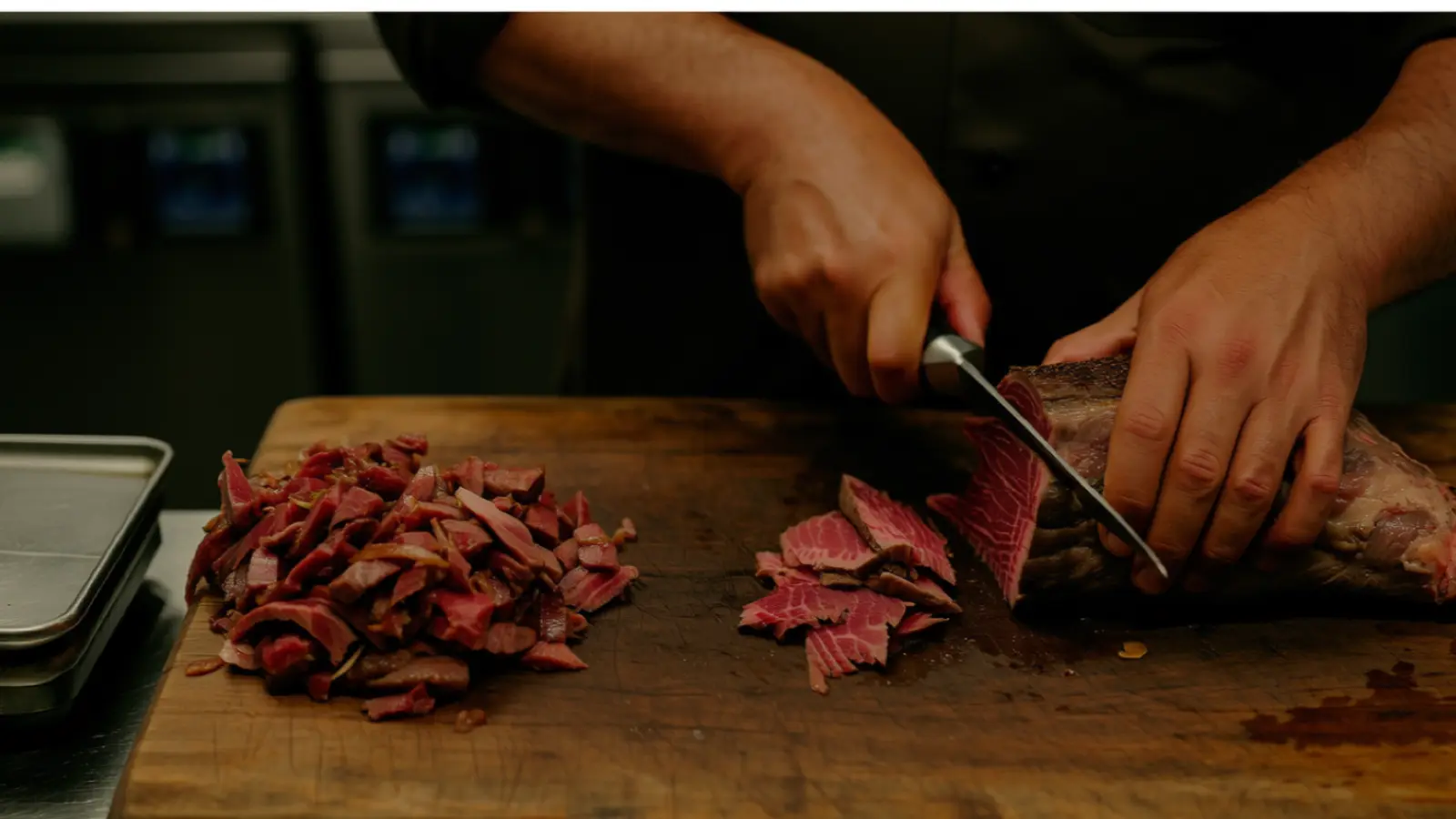
Most food cost calculations use the as-purchased (AP) price — what the invoice said. But you don't plate the whole thing. A beef fillet bought at $24/kg that you trim to 80% usable really costs $30 per plated kilo. A case of romaine loses its outer leaves. A pineapple loses 40–50% to skin and core. Cost the edible portion (EP), or every dish with fresh product is understated.
This is the gap between the food cost on your spreadsheet and the one on your bank statement. It compounds with every fresh ingredient on the plate.
Theoretical vs actual food cost
The food cost you calculate is theoretical — the perfect-world number. The actual one drifts. Industry studies find a kitchen typically runs 3–5% between theoretical and actual food cost (Restaurant365, MarginEdge), and a bar can lose up to 20% of its liquor stock to uneven pours and half-remembered recipes (Sculpture Hospitality).
On a 5–10% net margin, a 3–5% food cost gap is 30–50% of your profit evaporating every month — without anyone stealing a thing. This is the owner's real fear: not the number on the menu, but finding out on a P&L, weeks late, that the number was never true — theoretical vs actual food cost is how you find the gap while it's still this week's problem. The cause is almost always the same — the specs sleep in a binder, the purchase prices are stale, and no one can name the real cost of a plate mid-service.
How to calculate food cost percentage correctly, step by step
- Cost the edible portion of every ingredient — trim and waste included, not the as-purchased price.
- Use today's purchase prices, not the last list someone entered — update them when a supplier invoice lands.
- Take the menu price ex-tax before you divide.
- Divide ingredient cost by ex-tax price, multiply by 100 — that's your theoretical food cost.
- Compare it to your actual food cost (opening stock + purchases − closing stock, over sales). The gap between the two is where the money leaks.
- Review dish by dish monthly, not the venue average annually — you manage the outliers.
How methodus keeps food cost current
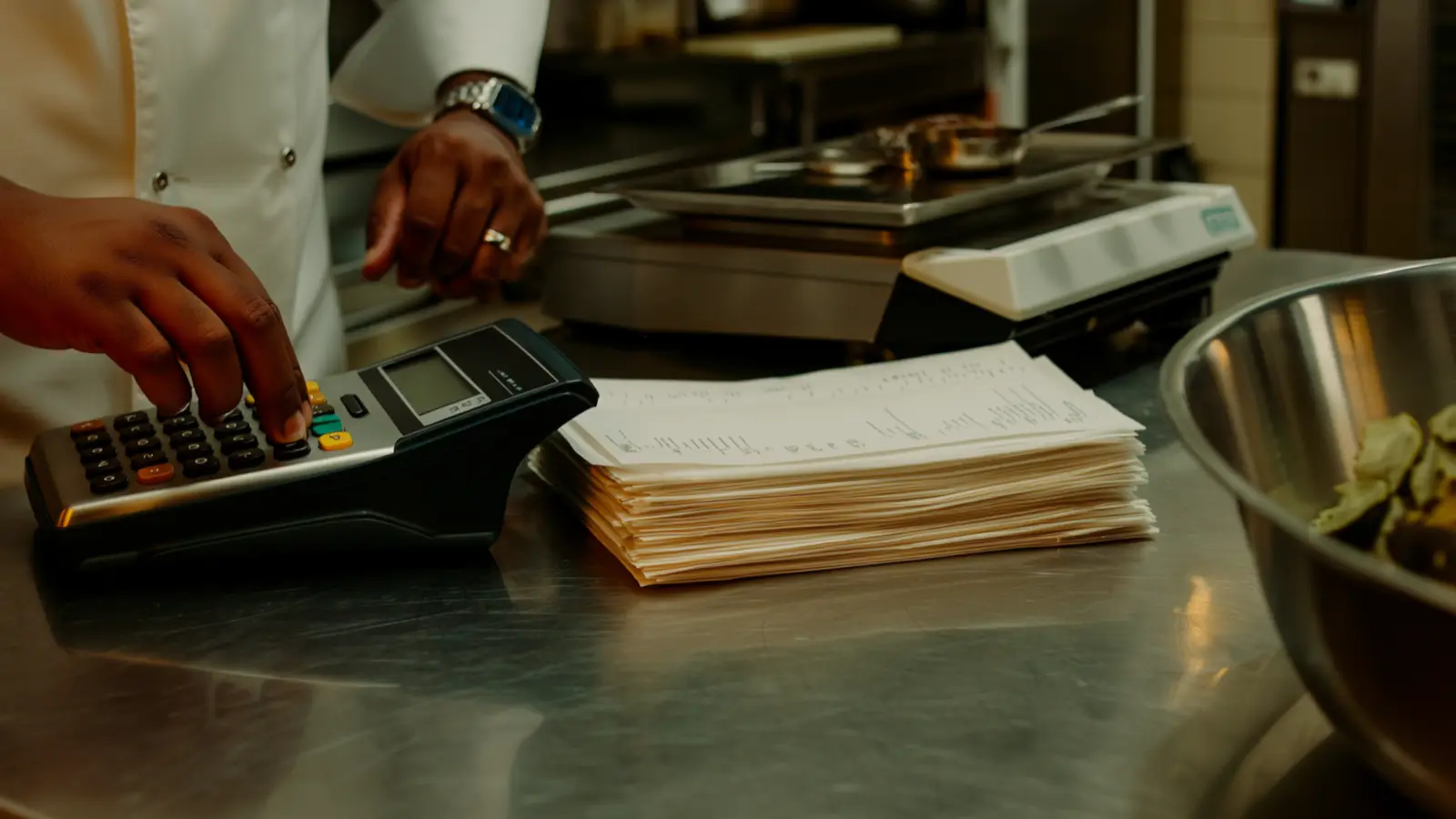
Doing this by hand for every spec, every time a price moves, is why food cost tracking gets abandoned by the second busy week. methodus does the data entry for you: drop a supplier invoice — PDF, photo, or email attachment — and it reads every line and updates your purchase prices. Every spec recalculates the moment a price moves, so the cost of each plate and each cocktail is current today, not at month-end.
The line and the bar see what a plate or a glass costs from their phones, so the pour holds itself — no policing. You stop chasing the drift: what used to evaporate every month becomes net profit again. See the full breakdown ingredient by ingredient in the pour cost guide, or watch your own number move in the food cost calculator.