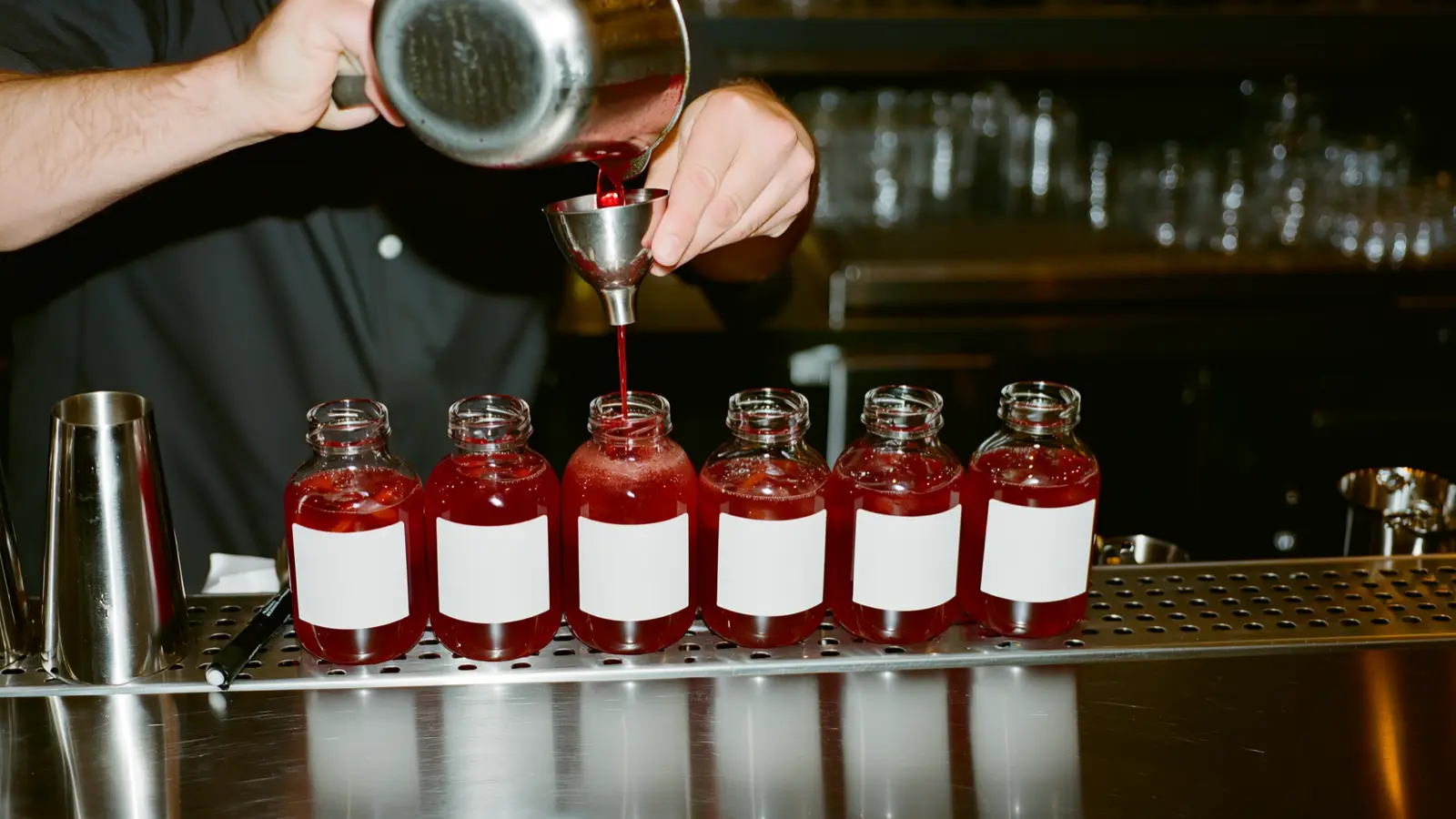
Batching gets sold as a speed trick; its real value is cost control. A cocktail built à la minute costs whatever that bartender pours that night. The same cocktail from a batch costs what the batch sheet says, every time, for every pair of hands behind the bar. The recipe doesn't get faster — it gets repeatable, and repeatable is what a pour cost needs to mean anything.
The costing itself is the easy part: a batch costs the sum of its components, and each serve costs the batch divided by its yield. The traps are the two things that change between the jigger and the bottle: dilution and shelf life.
Dilution: the free ingredient you have to measure
A stirred or shaken drink picks up water — commonly 20–25% of its volume, which is why batching practice adds that water up front when the drink will be poured chilled without stirring. Costing consequence: the water is free, but it changes the yield. A 3-litre spirit batch becomes 3.7 litres batched with dilution; cost per serve drops accordingly, and if your batch sheet ignores the water, every serve is over-costed on paper and over-poured in the glass.
Shelf life decides what you're allowed to batch
- Spirit-only batches (Negroni, Boulevardier): weeks — the alcohol preserves itself
- Batches with vermouth or fortified wine: days refrigerated — the vermouth oxidizes like wine
- Anything with citrus: same day, next day at a stretch — after that you're pouring compost
- Syrups and cordials: their own dated shelf life, costed as prep with yield loss
Batch the wrong category and the waste eats the benefit: a citrus batch built for a Friday that doesn't come kills its own margin by Sunday. The discipline is dating every bottle and sizing batches to real velocity — which you know from the till, not from optimism.
Why clubs batch
At Chat Noir, my club in Geneva, more than 300,000 drinks and plates have crossed the register in 18 months — call it a steady few hundred a night with peaks well beyond. At that pace, à la minute isn't a romantic choice, it's a queue. Batched signatures with the dilution in the sheet mean the busiest hour pours the same drink, at the same cost, as the quiet Tuesday — and the costing survives the rush instead of dissolving into it.
The batch sheet that keeps the margin
- Write the batch as a recipe: components, dilution, total yield, cost per serve
- Date and label every bottle; unsold past-date batch goes in the waste log, not the well
- Size batches from sales velocity, not from the size of the container
- Re-cost the batch when any component price moves — same rule as the rest of your beverage cost control