France has its DGCCRF and its paquet hygiène; Switzerland runs the same discipline under different names, and if you operate in Geneva, Vaud or anywhere in Romandie, the names matter. The Swiss system rests on one legal idea: the duty of autocontrôle — the establishment itself is responsible for proving, with documents, that its food is safe. Nobody certifies you. You certify yourself, and the canton comes to check — usually unannounced.
The legal frame in three layers
- The LDAl — the federal food law — sets the principle: whoever handles food must ensure it's safe, and must be able to demonstrate it
- The ordinances (ODAlOUs on foodstuffs, OHyg on hygiene) turn that into operational duties: good hygiene practice, HACCP-based procedures, traceability, temperature control, and documentation of all of it
- The autocontrôle concept ties it together: a written, living system — your hygiene practices, your critical points, your records — proportionate to your size. A small bistro's dossier is thinner than a central kitchen's, but it must exist
The BPHR: the sector's ready-made answer
You don't have to invent your autocontrôle from a blank page. The trade associations — GastroSuisse, HotellerieSuisse, CafetierSuisse and the collective-catering association — maintain the Guide des Bonnes Pratiques dans l'Hôtellerie et la Restauration (BPHR), validated by the federal food safety office (OSAV) in its 2018 revision. Working by the BPHR is the recognized way for a restaurant to meet the autocontrôle duty: it defines the good-practice baseline, the critical points that matter in a restaurant kitchen, and the records to keep. Cantons publish and reference it — Vaud distributes the guide directly. If your kitchen follows the BPHR and can show the paperwork, you're speaking the inspector's language.
Who actually knocks: the cantonal chemist
Enforcement is cantonal. Each canton's chemist and food inspectors control establishments — in Geneva through the SCAV (service de la consommation et des affaires vétérinaires), with equivalents in Vaud, Valais, Fribourg and the rest. Inspections are typically unannounced, and the conversation is documentary as much as visual: show me your temperature records, your cleaning plan, your traceability, your team's training. A spotless kitchen with no records fails the same conversation a documented kitchen passes. That's the Swiss twist — the paperwork is not bureaucracy on top of food safety; legally, it is the food safety.
The records that carry the inspection
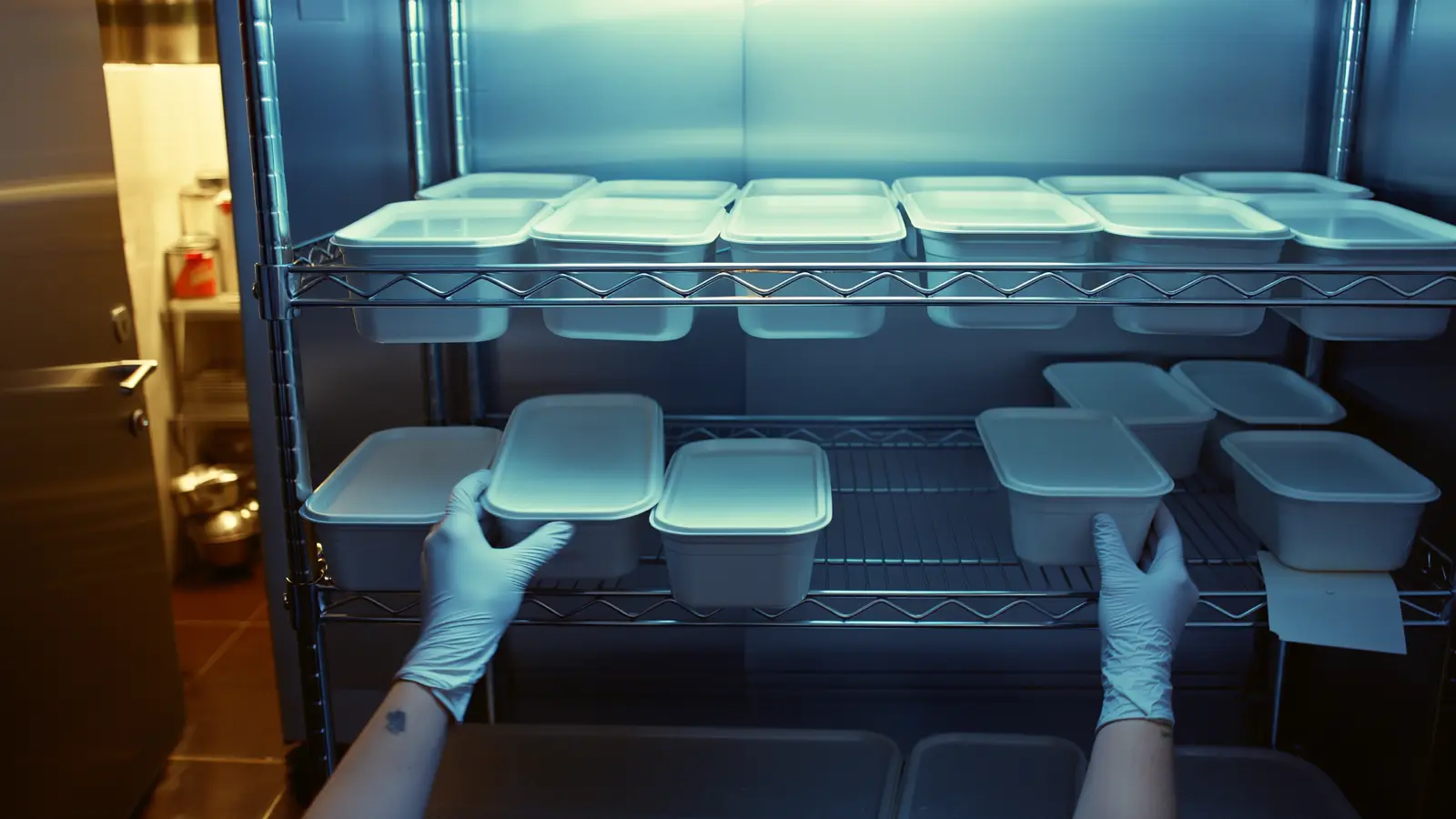
- Temperature logs — cold rooms and fridges on a rhythm, plus cooking/cooling where your process demands it
- Cleaning plan — who cleans what, when, with what, signed off
- Traceability — supplier records and labels for what came in (the receiving-label capture does double duty here); batch/lot findable in minutes, not hours
- Date management — DLC/DDM discipline and secondary shelf-life labels on everything opened, defrosted or produced in-house
- Team training — evidence that the people executing the plan actually know it; this is where most dossiers are thinnest
Making it light enough to actually live
The failure mode of autocontrôle isn't ignorance — it's decay. The binder gets built once, then service happens for six months. The fix is the same as everywhere in this trade: make the record a by-product of the work instead of a second job. Temperatures logged at the fridge in seconds, labels photographed at receiving, checklists signed on the phone that's already in the pocket, training tracked per person. That's precisely how the HACCP method guide is built — and at Chat Noir in Geneva, it's how the SCAV conversation stays a short one: the register is simply up to date, because keeping it up to date costs the team almost nothing.