Your existing menu, digitized and costed.
Upload the menu as a PDF or a photo. methodus reads every item, drafts a fiche for each, and estimates first costs. You start from your carte, not from a blank page.
Bring the carte in whatever shape it's in.
Bar menus take several files at once; kitchen menus go one photo or PDF at a time. Ten megabytes a file.
Reads the carte as it is
Sections, items, descriptions, prices. From the printed menu, the POS export, or a clear phone shot.
A draft fiche per item
Each dish and cocktail arrives as a fiche with estimated ingredients and costs. You refine the ones that matter; nothing starts from zero.
First margins the same day
Price estimation fills the gaps until your invoices take over. The first honest look at the carte's margins comes the day you import it.
From upload to first margins.
Upload the carte
PDF, photo, spreadsheet, text or URL. The menu you already print is enough.
Review every item
Each dish and cocktail lands in a review screen: name, price, ingredients, and what's missing flagged. Untick anything you don't want.
Link the ingredients
Every extracted ingredient is matched against your library: link it, create it, or skip it. No duplicates, no mystery rows.
Drafts, costed the same day
Selected items become draft fiches with estimated costs. Nothing publishes itself; you promote drafts when they're right.
Built for the switch
Retyping a 60-item carte is where most tools lose you. Here the import does the typing; your afternoon goes to correcting, not creating.
One afternoon
For a full carte to become draft fiches with first costs. The weeks of typing are the part that no longer exists.
More than names and prices.
A carte carries more information than most tools bother to keep. The import keeps it.
- Descriptions, categories and dietary flags for dishes; technique, glassware and garnish for cocktails.
- Size variants stay separate: the glass and the bottle each keep their own price.
- Wines and spirits served as they are become products with bottle size and ABV, not fake recipes.
- Allergens are read from the dish where they're visible, feeding the fiche's 14-INCO tracking.
Estimates that admit they're estimates.
Day-one costs are estimated so the carte can be ranked immediately. The difference is that methodus says so, out loud, until real prices arrive.
- Every estimated price carries a range and its assumptions, and stays flagged until you confirm it.
- Prices already in your library always win over estimates.
- From the first scanned invoice onward, real supplier prices take over, line by line.
The fiche arrives dressed.
While you review, methodus keeps working in the background. Each draft fills in with the things a fiche needs and nobody enjoys typing.
- Build steps drafted from the recipe once quantities settle.
- Tasting notes, aroma and a guest pitch drafted for the service team.
- It keeps going after you close the tab; drafts finish filling in on their own.
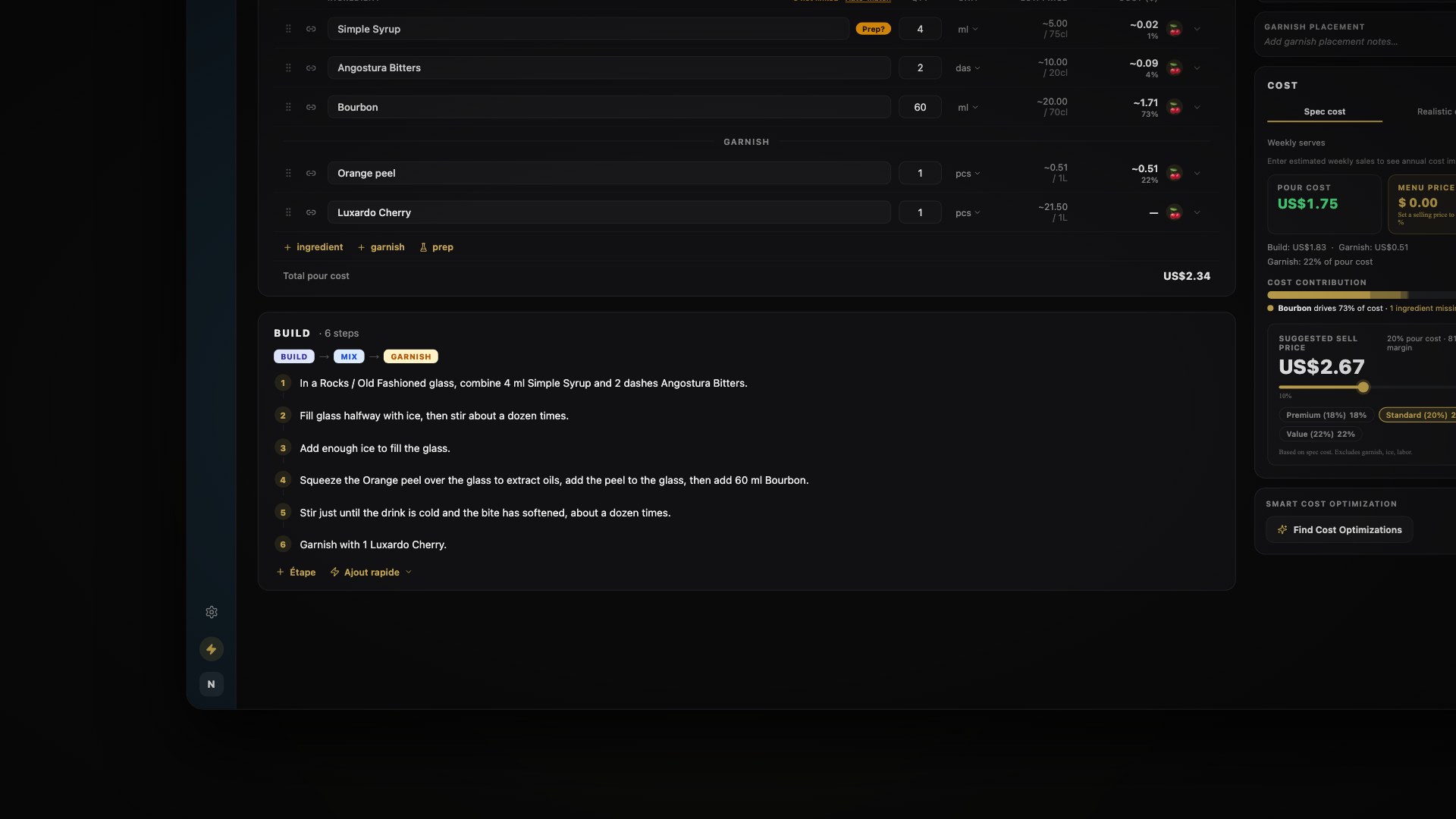
It reads the menu's language. It writes in yours.
The import detects the carte's own language, keeps the original wording on the fiche, and writes your working copy in your working language. Every ingredient keeps both its menu name and its translation, so a 'fruit de la passion' and a 'passion fruit' never become two ingredients.
Common questions
What can I upload?
PDF, photo or plain text. If it's readable, it imports: printed menus, POS exports, a clear shot of the chalkboard.
How good are the estimated costs?
Good enough to rank the carte on day one, and marked as estimates so you know. Real invoice prices replace them as your documents come in.
My carte changes with the seasons.
Import the new items, archive the old. Every fiche keeps its history, so last summer's numbers are still there next summer.
Cocktail menus too?
Yes. Bar items become specs with pour costs, food items become kitchen fiches, in one library.
Will it read everything perfectly?
No, and be wary of tools that promise it. Clear type reads best; a dim photo of a chalkboard won't. Everything that is read lands in a review screen with the gaps flagged, and anything missed can be pasted as text.
Wine by the glass and by the bottle?
Both prices survive as separate variants. Bottles sold as they are become products with format and ABV, so your list stays a list, not a pile of fake recipes.
My carte mixes French and English.
methodus detects the menu's language, keeps the original wording, and writes your working copy in your working language. Ingredients keep their menu name and their translation side by side.
How long does it actually take?
The reading takes minutes per file. The honest part is the review: plan an afternoon for a full carte, and most of it goes to deciding, not typing.
Then read your carte like an operator.
Stars, workhorses, puzzles, dogs: once your items carry cost and sales, methodus plots the matrix. The menu-engineering guide explains how to act on it.
Read the menu-engineering guide →Bring your carte. Leave with it costed.
Twenty minutes with the founder. Bring one recipe; leave with its real cost.
14-day trial, no credit card.