La plupart des responsables de bar calculent leur coût matière de travers. Non pas qu'ils soient fâchés avec les chiffres : ils partent simplement des mauvaises données. Ils divisent le prix payé pour une bouteille par le nombre de verres qu'elle permet de servir, et appellent ça le coût matière. Ça n'en est pas un.
Le vrai coût matière tient compte de trois choses que votre calcul simplifié ignore : les pertes de rendement (vous n'utilisez pas le citron vert en entier), les pertes à la mise en place (le sirop simple perd du volume) et le dosage à l'œil (vos barmen versent 10 à 20 % de trop). Une fois ces trois écarts corrigés, votre coût matière grimpe de 15 à 30 %.
La formule de base (et pourquoi elle ne suffit pas)
La formule des manuels : Coût matière % = (coût des ingrédients ÷ prix de vente) × 100. Si les ingrédients coûtent 3 € et que le prix de vente est de 15 €, votre coût matière est de 20 %. La plupart des bars visent 18 à 24 %.
Le problème : le « coût des ingrédients » repose presque toujours sur le prix d'achat brut. Vous avez payé vos citrons verts 0,63 € pièce. Votre Daiquiri en utilise la moitié. Coût : 0,31 €. Exact ? Faux.
Étape 1 : intégrer les pertes de rendement (brut vs net)
« AP » (as purchased) désigne le poids brut, à l'achat. « EP » (edible portion) désigne la portion réellement utilisable. Un citron vert donne environ 1 oz de jus. Votre coût par once de jus de citron vert est donc de 0,63 € — et non de 0,21 € (en découpant le citron en trois « portions »). Une botte de menthe ne fournit des feuilles utilisables que sur 60 % de ses tiges. Un ananas perd 40 à 50 % de son poids à la peau et au cœur.
En calculant le coût de vos ingrédients à partir des prix bruts (AP) plutôt que des prix nets (EP), vous sous-estimez le vrai coût de chaque boisson qui contient du frais.
Étape 2 : intégrer le coût des préparations maison
Votre sirop simple n'est pas gratuit. Un sirop riche 2:1 demande 2 tasses de sucre (~0,80 €) et 1 tasse d'eau, pour un rendement d'environ 1,75 tasse après évaporation et pertes au transvasement. Multipliez maintenant par chaque préparation maison : orgeat, grenadine, shrubs, infusions. Chacune alimente plusieurs recettes. Quand le prix de l'amande bouge, chaque cocktail à l'orgeat devrait être réactualisé — mais ne l'est pas.
Étape 3 : intégrer l'écart du dosage à l'œil (free pour)
Les études montrent que les barmen qui dosent à l'œil versent en moyenne 10 à 20 % de trop. Une dose de 2 oz devient 2,2 à 2,4 oz. Sur un spiritueux à 40 € la bouteille, cela représente 1 à 2 € de coût non récupéré par verre. Intégrez un facteur d'écart de 15 % à votre modèle de coût.
Exemple concret : la Margarita à 2,40 € qui en coûte 3,85 €
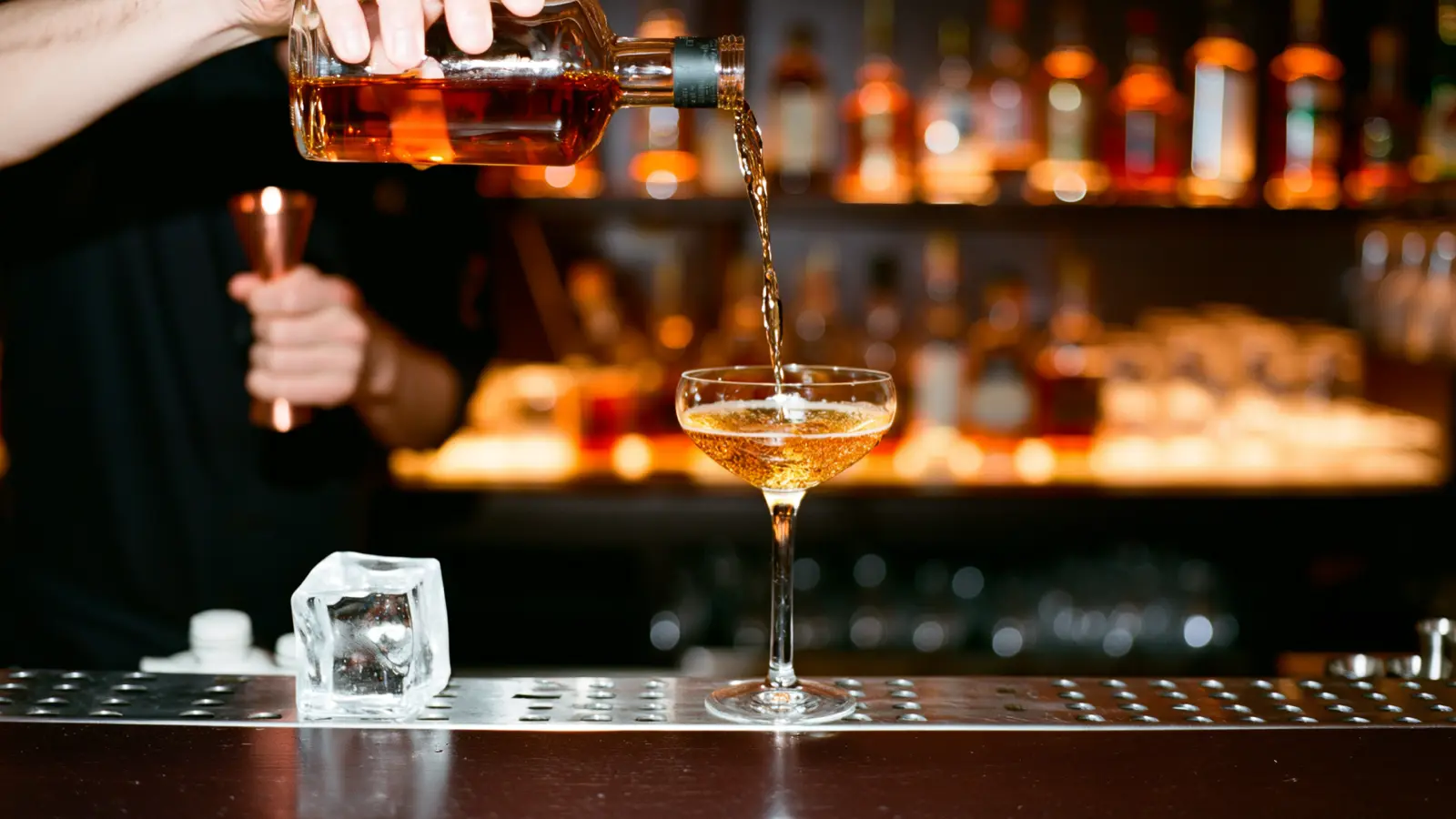
Margarita classique : 2 oz de tequila, 1 oz de Cointreau, 1 oz de jus de citron vert, 0,5 oz de sirop simple, givrage au sel.
Calcul rapide : tequila 1,80 € + Cointreau 0,85 € + citron vert 0,31 € + sirop 0,05 € + sel 0,02 € = 2,40 €. Coût matière pour un prix de vente de 14 € : 17,1 %.
Calcul réel : tequila avec surdosage 2,07 € + Cointreau avec surdosage 0,98 € + jus de citron vert ajusté au rendement 0,63 € + sirop simple ajusté à la préparation 0,12 € + sel 0,02 € + garniture 0,03 € = 3,85 €. Vrai coût matière : 27,5 %.
L'écart : 1,45 € par verre. À 50 Margaritas par soir : 72,50 € par jour, 2 175 € par mois, 26 100 € par an. Pour une seule boisson.
Une précision importante : c'est un exemple illustratif, qui montre comment les pertes de rendement, les pertes à la mise en place et le dosage à l'œil se cumulent. Votre écart réel variera selon la recette, l'équipe et la rigueur du dosage. Les données du secteur, issues de plus de 30 000 audits de bars (Bar-i, 2009-2025), montrent qu'un bar moyen perd 15 à 20 % du produit servi au coulage — surdosage, gaspillage, offerts non consignés et erreurs de mesure. Pour un bar réalisant 40 000 € de chiffre d'affaires boissons par mois, ces 15 % représentent environ 6 000 € par mois, soit 72 000 € par an de coulage total. L'écart par verre varie, mais la perte globale est bien documentée.
Comment corriger votre calcul de coût matière
- Calculez le coût net (EP) de chaque ingrédient frais
- Chiffrez chaque préparation maison à partir de ses composants, pertes de rendement comprises
- Ajoutez un facteur d'écart de 10 à 15 % pour tout ce qui se sert à l'œil
- Réactualisez les coûts dès que les prix fournisseurs changent — automatiquement
- Passez vos coûts matière en revue chaque mois, pas chaque année — les repères du secteur montrent que les bars qui le font mensuellement réduisent leur coulage de 3 à 5 % (données clients Bar-i)
Comment methodus s'en charge
methodus calcule le vrai coût matière automatiquement. Définissez un pourcentage de rendement par ingrédient. Chiffrez les préparations maison à partir de leurs composants. L'application répercute les coûts dans chaque recette — changez le prix du sucre et tous les cocktails à base de sirop se mettent à jour. Le coût matière sur une fiche technique methodus, c'est le vrai chiffre.